
Feeling upset or afraid because your husband’s anger crosses the line is more common than many realize—especially in Christian marriages where peace and love should be at the center. I know how heavy that burden can feel; I’ve faced it myself, and through prayer and research I found that healthy boundaries are not just helpful—they’re needed to build safety and respect. This post will show you simple ways to set boundaries using both biblical wisdom and practical steps, while staying true to your faith. You’re not alone—read on to see how hope and healing are possible.
The importance of healthy boundaries in a Christian marriage
Healthy boundaries help protect my heart, mind, and body. I set limits with love to keep both of us safe from harm or disrespect. The Bible calls me to honor God and myself as a child of God.
Jesus says in Matthew 5:32 that marriage should not be full of sin like abuse or adultery.
I use healthy communication strategies so anger does not lead to emotional or physical abuse. Boundaries can stop cycles of power and control that damage a marriage. As Galatians teaches, the fruit of the Spirit is self-control.
Setting boundaries supports healing relationships, encourages respect, and helps each person grow closer to Christ.
Above all else, guard your heart, for everything you do flows from it. (Proverbs 4:23)
Understanding the role of boundaries in creating safety and respect
Boundaries help me protect my emotional health in my marriage. If anger grows too loud or harsh, I step back and pause the conversation. I speak up and say what is not okay, like yelling or slandering, because God wants us to treat each other with respect and love.
Setting these limits does not mean I tempt him to anger, but helps end the cycle of abuse and power and control in our home. Drawing a line lets my husband know I value safety and will not let hurtful patterns continue.
God’s Word guides me here. The gospels teach that each person matters to God—my feelings are important too. Jesus set boundaries with the apostles and even with sinners who tried to trap Him in deceptions.
The Ten Commandments spell out many boundaries for holy living; these protect from harm and uphold justice. Healthy relationships depend on honoring each person as a child of God, not as someone to control or abuse.
Setting healthy boundaries helps create peace at home and gives space for true reconciliation and healing relationships to grow.
Establishing Healthy Boundaries With an Angry Husband

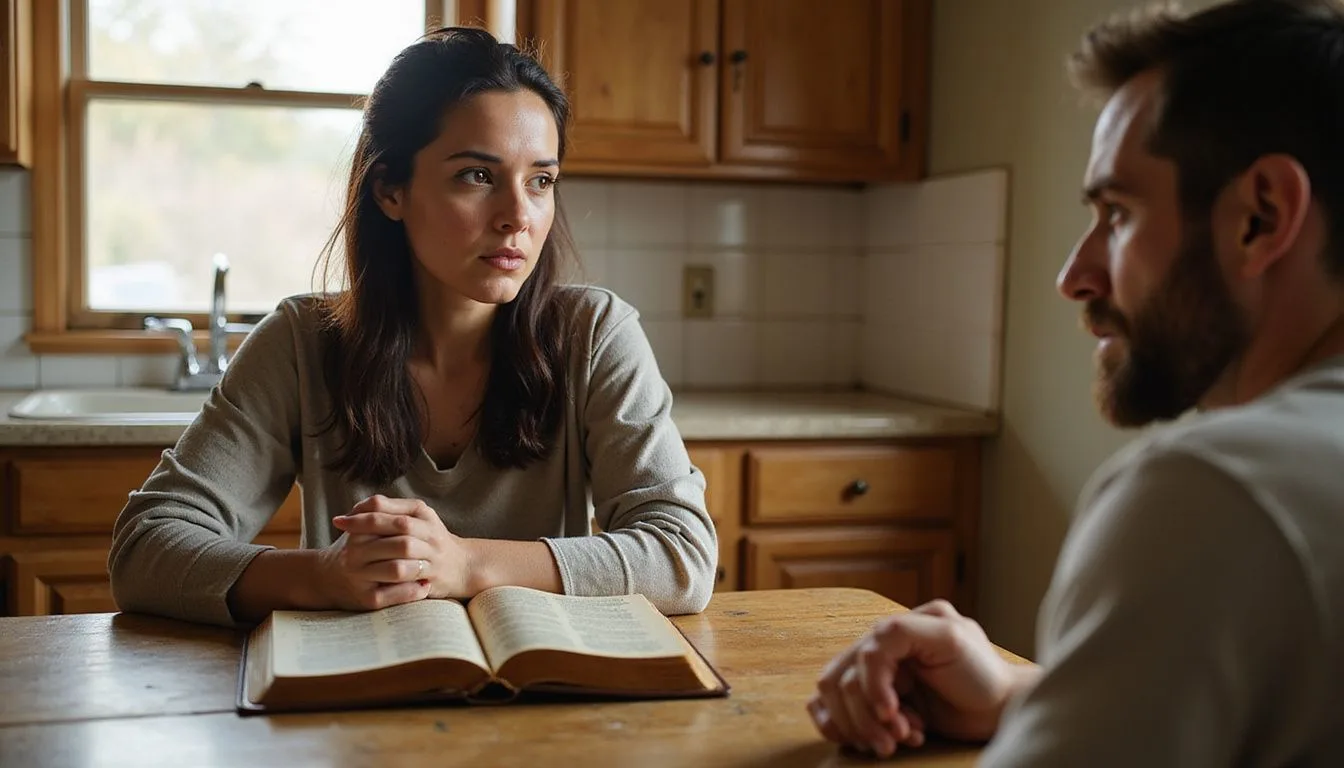
Setting healthy boundaries with an angry husband can protect my heart, support healing relationships, and help both of us grow closer to God—keep reading to learn how faith, kindness, and practical steps can bring peace.
Identifying and confronting unhealthy patterns of behavior
I see the need for setting healthy boundaries with an angry husband. It’s crucial in building a marriage based on respect and safety. Here’s how I tackle unhealthy patterns of behavior:
- First, I spot the signs of emotional abuse. This could be constant criticism or blaming me for everything.
- I then listen to my feelings. If I often feel scared or anxious around him, it’s a red flag.
- Next, I keep a journal. Writing down what happens helps me see patterns.
- I talk to someone close, like a friend or family member. They offer me support and sometimes notice things I don’t.
- Prayer becomes my strength. Asking God for guidance and peace is vital.
- Reading the Bible offers me wisdom on handling tough situations.
- Setting clear limits comes next. For example, if he yells, I calmly say, “I’ll talk when you’re not shouting.”
- Seeking professional help is important too. A therapist can give me tools to cope and communicate better.
- Lastly, joining a support group at church connects me with others facing similar struggles.
Doing these steps has helped me face and tackle unhealthy behaviors in my marriage firmly yet lovingly.
Setting boundaries with love and respect
Establishing limits within a Christian union is vital. This process necessitates open dialogue and reverence. Here are strategies for setting limits with love and respect:
- Clearly specify which actions are acceptable and which are not. Discuss actions that cause emotional distress or harm the relationship openly.
- Show respect for his thoughts and emotions by actively listening when your husband discusses his feelings or frustrations.
- Use “I” statements to describe how specific actions impact you. Say phrases like, “I feel hurt when…” rather than directly placing blame on him.
- Pray as a couple for guidance, fortitude, and comprehension in setting these limits.
- Advocate for professional assistance from a marriage counselor if recurring issues surface. Nipping problems in the bud together with a professional’s aid is critical.
- Foster one another’s growth by acknowledging efforts made in respect to newly established limits.
- When discussing limits, fall back on biblical principles, emphasizing the significance of love and respect as instructed in the scriptures.
- Relay personal revelations or insights derived from prayer or scripture study that may assist in better comprehending each other’s necessities.
- Be swift in offering forgiveness when errors occur, demonstrating a will to heal and advance collectively.
- If confronted with more severe issues like domestic violence, bring in trusted church members or leaders, ensuring the priority is everyone’s safety and welfare.
Each of these steps demands patience, understanding, and a strong dedication to cultivating healthy relationships according to Christian values.
Seeking professional help when needed
I find that honest conversations only go so far in a marriage touched by domestic abuse or uncontrolled anger. Sometimes, marriage counseling or talking with a Christian counselor helps open new doors.
Safe spaces with trained professionals can help both of us understand what healthy boundaries mean. Even Bible-based marriage counselors use tools from Genesis, Philippians, and the teachings of Jesus to guide couples.
If my husband’s anger threatens our emotional health, or if there are signs of abusive relationships, mental illness, or rapid cycling, reaching out is the kind thing to do. Church leaders or a support group from the church can also offer prayer, wisdom, and a caring ear.
Seeking help does not mean I have failed as a wife or a disciple. It shows I value the safety and emotional well-being God wants for His children.
Navigating Boundaries in Marriage from a Christian Perspective
I turn to scripture and prayer for guidance when I need to set boundaries in my marriage. Support from church friends and Christian counselors helps me grow closer to God and find healing.
Understanding the biblical principles behind boundaries
God set boundaries from the start. In Genesis, He told Adam and Eve not to eat the fruit of the tree of knowledge of good and evil. This limit was for their safety and growth. Jesus also gave clear rules—He said in Mark 12:31, “Love your neighbor as yourself.” Healthy boundaries help me love others and protect my emotional well-being.
The apostle Paul taught about self-control in Philippians 4:13, saying I can do all things through Christ who strengthens me. Setting healthy boundaries with an angry husband does not mean breaking God’s law or leaving holiness behind; instead, it means honoring my worth as a child of God.
The Bible never says I must accept abusive relationships or coercive control—it calls each person to live in peace and respect.
If it is possible, as far as it depends on you, live at peace with everyone. (Romans 12:18)
God cares about healing relationships that are broken by power and control issues. Praying and seeking support from church leaders brings strength for those times I need help setting firm yet loving limits—even during mental illnesses or hard temptations like cheating or abuse on children.
Honoring one’s own self-worth and identity as a child of God
God made me with value and purpose. My worth does not depend on an angry husband’s moods or hurtful words. I am part of God’s kingdom, called to be a helpmeet, not an object for power and control.
My identity as a child of God stands firm, no matter if someone tries to tear me down or abuse my trust.
I learned from the Book of Mormon that even disciples like Nephi faced mistreatment from Laman and Lemuel, but their faith stayed strong. Christ gave His life so I could have eternal life and emotional well-being, even through trials in marriage.
Praying daily, reading Philippians, and seeking healthy relationships remind me that my self-worth is rooted in salvation, not man’s approval or abusive relationships.
Finding hope and healing through prayer, counseling, and support from the church community
Seeing my worth as a child of God helped me reach for hope. In hard moments, prayer gave me peace. I prayed for wisdom and strength, and trusted Jesus to carry my pain. Sometimes, it felt lonely, but the prayers of others lifted me up.
Christian marriage counseling also mattered so much to me. It showed me healthy boundaries and gave me tools for emotional health. My church family supported me with kindness and love; I did not feel judged by the stigma of mental illness or anger in marriage.
Their support led me toward healing relationships and reminded me that faith and community are powerful tools against darkness and emotional pain.
Conclusion
Setting boundaries with an angry husband is not easy, but it brings safety and respect into marriage. By using clear communication and showing loving firmness, I protect my emotional health.
Simple steps like prayer, seeking counseling, and leaning on church friends really help. These choices build a stronger faith and offer hope, even in hard times. If you want more help, there are books and faith leaders who can guide you.
Each step forward brings new strength; God walks with us as we seek healthy relationships.
FAQs
1. What does it mean to establish healthy boundaries in a marriage?
Establishing healthy boundaries means creating emotional and physical limits within your relationship that respect each person’s needs, ensuring emotional well-being.
2. How can biblical principles help set these boundaries with an angry husband?
Biblical principles provide guidance on maintaining healthy relationships, emphasizing the importance of respect and communication strategies. They discourage power and control dynamics often seen in abusive relationships.
3. Can setting boundaries be considered tempting him or justification for his anger?
No, setting up emotional health-focused boundaries is not about tempting or justifying anger; rather it’s a step towards healing relationships by promoting understanding and mutual respect.
4. How can one handle a situation where their spouse has bipolar disorder?
In such cases, professional help like marriage counseling guided by Christian values is recommended to manage mentally ill situations including psychotic episodes effectively while keeping faith intact.
5. Is there any connection between establishing healthy boundaries and Christianity itself?
Yes! Christianity promotes love, respect, and patience as cornerstones of any relationship including marriage – reinforcing the concept of setting healthy boundaries for overall emotional well-being.
6. Do all faiths support the idea of setting up these kinds of boundaries?
While practices may vary across different faiths, the core idea behind establishing healthy personal space applies universally – even beyond religious contexts – as key to nurturing respectful interactions.